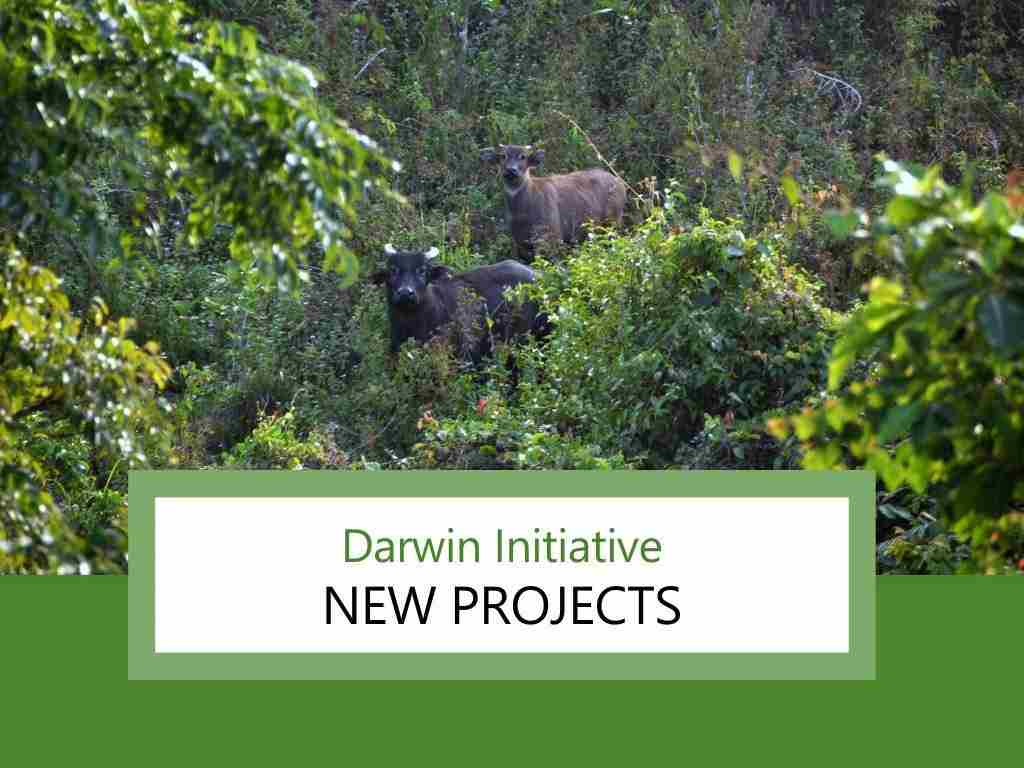
The Darwin Initiative Grants Round 32 funding call is now officially open, providing organizations with an exceptional opportunity to secure funding of up to £5 million for projects that protect biodiversity, restore ecosystems, reduce poverty, and promote sustainable economic development.
Funded by the UK Government through the Department for Environment, Food and Rural Affairs (DEFRA), the Darwin Initiative has become one of the world’s most respected biodiversity funding programmes. Since its establishment in 1993, the programme has supported more than 1,370 projects across over 150 countries, investing more than £289 million in conservation and sustainable development initiatives worldwide.
For organizations, conservation groups, research institutions, government agencies, and development partners seeking financial support for impactful biodiversity projects, the Darwin Initiative Grants present a valuable opportunity to drive meaningful and lasting environmental change.
Overview of the Darwin Initiative Grants
| Details | Information |
|---|---|
| Host | UK Government (DEFRA) |
| Eligible Countries | 35 Countries Across 13 Priority Biodiversity Hotspots |
| Reward | Up to £5 Million |
| Deadline | Varies by Scheme |
| Application Link | Click HERE for more and to apply |
| Scholarship Alerts | To receive Scholarship Alerts on WhatsApp, Click HERE |
What is the Darwin Initiative?
The Darwin Initiative is a long-running international conservation programme that supports projects focused on protecting biodiversity while improving the livelihoods of local communities.
The programme recognizes that biodiversity conservation and poverty reduction are closely connected. Many communities around the world depend directly on forests, wetlands, marine ecosystems, and other natural resources for their livelihoods. Therefore, protecting these ecosystems not only safeguards wildlife and natural habitats but also contributes to sustainable economic growth and community resilience.
Through strategic investments, the Darwin Initiative helps countries and communities develop practical solutions to environmental challenges while strengthening governance systems and creating opportunities for sustainable development.
Since its launch, the programme has funded projects in Africa, Asia, Latin America, the Caribbean, and other biodiversity-rich regions, helping organizations implement innovative conservation initiatives with measurable long-term impact.
Key Objectives of the Darwin Initiative
The Darwin Initiative supports projects that contribute to several interconnected goals, including:
1. Biodiversity Conservation and Restoration
A primary objective of the programme is to conserve and restore biodiversity in some of the world’s most ecologically important regions.
Projects may focus on:
- Forest conservation
- Marine ecosystem protection
- Wetland restoration
- Species conservation
- Sustainable land management
- Ecosystem recovery initiatives
By protecting critical habitats, funded projects contribute to global biodiversity targets while supporting local communities.
2. Poverty Reduction
The Darwin Initiative emphasizes projects that improve the livelihoods of people living in biodiversity-rich areas.
Successful projects often create sustainable income opportunities through:
- Eco-tourism
- Sustainable agriculture
- Fisheries management
- Forest-based enterprises
- Climate-resilient livelihoods
This approach ensures that conservation efforts generate tangible benefits for local populations.
3. Strengthening Environmental Governance
Strong governance systems are essential for long-term conservation success.
The programme therefore supports initiatives that:
- Strengthen environmental policies
- Improve institutional capacity
- Enhance stakeholder participation
- Build local leadership
- Improve natural resource management systems
4. Climate Resilience and Adaptation
As climate change continues to threaten ecosystems and communities worldwide, the Darwin Initiative promotes projects that strengthen resilience through ecosystem-based adaptation approaches.
Projects may help communities:
- Adapt to changing climatic conditions
- Protect vulnerable ecosystems
- Improve water management
- Strengthen disaster preparedness
- Enhance food security
5. Sustainable Economic Development
The programme supports sustainable economic activities that protect biodiversity while creating long-term economic opportunities.
This integrated approach helps communities achieve development goals without compromising environmental sustainability.
Funding Available Under Darwin Initiative Round 32 Grants
Organizations applying under the Darwin Initiative Round 32 Grants can access significant financial support depending on the selected funding scheme.
Funding Amount
Projects may receive funding of up to:
£5 Million per Project
The funding level varies according to project scope, objectives, and the specific scheme selected.
Available Funding Schemes
Applicants can choose from three primary funding streams:
Darwin Initiative Extra
The Darwin Initiative Extra scheme supports large-scale projects capable of delivering transformational biodiversity outcomes.
These projects are expected to demonstrate:
- Significant conservation impact
- Strong partnerships
- Long-term sustainability
- Strategic national or regional influence
Because of their scale, Extra projects often involve multiple stakeholders and extensive implementation plans.
Darwin Initiative Main
The Main scheme supports medium-sized projects that address important biodiversity conservation challenges while delivering community and development benefits.
Projects funded under this scheme typically focus on:
- Conservation interventions
- Community engagement
- Capacity building
- Policy development
- Sustainable livelihood improvements
Darwin Initiative Capability & Capacity
This scheme focuses on strengthening local capacity and institutional development.
Funding can support activities such as:
- Skills development
- Organizational strengthening
- Technical training
- Partnership development
- Knowledge sharing
The objective is to create stronger institutions capable of sustaining conservation efforts over the long term.
Major Changes Introduced in Round 32
The Darwin Initiative Round 32 Grants introduce several important updates designed to improve effectiveness, accessibility, and long-term impact.
Biodiversity Hotspot Targeting
One of the most significant changes in Round 32 is the introduction of a stronger focus on biodiversity hotspots.
Applications must target one of the programme’s designated priority biodiversity hotspots located across 35 countries.
This approach is intended to:
- Increase conservation impact
- Improve resource allocation
- Reduce duplication of efforts
- Strengthen collaboration among projects
- Enhance ecosystem protection outcomes
By concentrating resources in strategically important locations, the programme aims to maximize biodiversity gains.
Systems-Level Change Approach
The programme is increasingly focused on achieving systems-level transformation.
Rather than supporting only direct conservation activities, applicants are encouraged to develop projects that strengthen:
- Governance systems
- Market systems
- Institutional frameworks
- Policy environments
- Sustainable financing mechanisms
The goal is to ensure that project benefits continue long after funding has ended.
Simplified Application Process
To reduce the burden on applicants, the programme has streamlined the application process.
For Darwin Initiative Extra and Darwin Initiative Main:
- Stage 1 now consists of a shorter concept note.
- Only the most competitive proposals will be invited to submit detailed Stage 2 applications.
This new structure saves time and resources for applicants while improving the overall quality of submissions.
Funding Structure Adjustments
Another important change is the removal of the Innovation Scheme.
Innovation-related funding opportunities are now covered through the Global Centre on Biodiversity for Climate (GCBC).
As a result:
- More resources are available for the remaining Darwin schemes.
- Funding can be concentrated on high-priority conservation projects.
- Greater emphasis is placed on strategic alignment and project quality.
Lead Applicant Restrictions
To encourage broader participation and strengthen fairness, organizations can only serve as the lead applicant on one proposal per scheme.
However:
- Organizations may still participate as partners in multiple applications.
- Collaborative partnerships remain strongly encouraged.
This adjustment is intended to support diversity among applicants while promoting local leadership.
Why the Darwin Initiative Round 32 Grants Matter
Global biodiversity is facing unprecedented challenges.
Habitat destruction, climate change, pollution, invasive species, and unsustainable resource use continue to threaten ecosystems around the world.
The Darwin Initiative addresses these challenges by investing in practical, scalable solutions that deliver measurable conservation outcomes while improving human well-being.
Its unique approach recognizes that successful conservation depends on local communities, strong institutions, and sustainable economic opportunities.
This integrated model has made the programme a leading example of effective international conservation funding.
Darwin Initiative Achievements Since 1993
Over the past three decades, the Darwin Initiative has generated remarkable results worldwide.
Key achievements include:
- More than £289 million invested globally
- Over 1,370 conservation projects funded
- Projects implemented in more than 150 countries
- Millions of hectares of ecosystems protected
- Over 100,000 people supported through climate resilience initiatives
- Significant contributions to biodiversity conservation in forests, wetlands, grasslands, and marine ecosystems
These achievements demonstrate the programme’s ability to deliver both environmental and socio-economic benefits.
Example of Darwin Initiative Impact in Indonesia
Indonesia provides a powerful example of the programme’s impact.
Darwin-funded projects have helped:
- Sustainably manage approximately 1.3 million hectares of forests and fisheries
- Support the management of a UNESCO Biosphere Reserve covering 12.6 million hectares
- Strengthen biodiversity governance systems
- Improve regional conservation planning
- Promote sustainable resource management practices
These outcomes highlight how targeted investments can generate long-lasting benefits for ecosystems and communities alike.
Darwin Initiative Round 32 Webinar
To help applicants understand the latest programme changes, the Darwin Initiative will host an official online webinar.
Webinar Details
Date: 28 May 2026
Time: 6:00 PM (Vietnam Time)
UK Time: 12:00 PM – 1:00 PM (GMT+1)
Format: Online Briefing Session
Topics Covered
Participants will learn about:
- Key updates introduced in Round 32
- New application requirements
- Changes to funding structures
- Priority biodiversity hotspots
- Eligibility criteria
- Scheme-specific guidance
- Proposal development tips
- Question and answer session
The webinar provides an excellent opportunity for prospective applicants to gain insights directly from programme administrators.
A recording of the session and presentation materials will also be made available on the programme’s Workshops and Webinars resource page.
Darwin Initiative Round 32 Application Deadlines
Applicants should carefully note the deadlines associated with each funding scheme.
Darwin Initiative Main
- Stage 1 Deadline: 20 July 2026
- Stage 2 Deadline (Invitation Only): 30 November 2026
Darwin Initiative Extra
- Stage 1 Deadline: 1 July 2026
- Stage 2 Deadline (Invitation Only): 2 November 2026
Darwin Initiative Capability & Capacity
- Single-Stage Deadline: 31 August 2026
Applicants are encouraged to begin preparing their proposals well before the deadlines.
How to Apply for the Darwin Initiative Round 32 Grants
Organizations interested in applying should carefully review the programme guidance and determine the most appropriate scheme for their project.
Before submitting an application, applicants should:
- Review all eligibility requirements
- Read scheme-specific guidance documents
- Select the appropriate funding stream
- Ensure alignment with biodiversity hotspot priorities
- Demonstrate systems-level impact
- Develop strong local partnerships
- Present realistic implementation plans
- Clearly explain sustainability measures
- Provide evidence of organizational capacity
Strong proposals typically demonstrate both biodiversity conservation outcomes and meaningful benefits for local communities.
Click HERE to apply
Tips for Submitting a Competitive Application
To increase the chances of success, applicants should focus on:
Strategic Alignment
Ensure that the project directly addresses Round 32 priorities and biodiversity hotspot requirements.
Strong Partnerships
Collaborate with local organizations, government agencies, research institutions, and community groups.
Sustainability
Demonstrate how project outcomes will continue after funding ends.
Measurable Impact
Develop clear indicators to track biodiversity, social, and economic outcomes.
Capacity Building
Include activities that strengthen local institutions and community leadership.
Projects that combine these elements are more likely to achieve long-term success and attract funding support.
Conclusion
The Darwin Initiative Round 32 Grants offer a remarkable opportunity for organizations committed to biodiversity conservation, poverty reduction, and sustainable development. With funding of up to £5 million available, the programme continues its long-standing mission of supporting impactful environmental projects across biodiversity-rich regions of the world. Applicants should carefully review the updated priorities, focus on systems-level change, build strong local partnerships, and submit well-designed proposals that deliver lasting conservation and community benefits. Early preparation will significantly improve the chances of success.
Join our WhatSapp Channel or Click HERE for more scholarship opportunities on Scholarship Picker
Discover more from Scholarship Picker
Subscribe to get the latest posts sent to your email.